
YBT News
The latest news and stories from Yunbiotech.
Finger Splint Guide Mallet Finger · Boutonnière Deformity · Swan Neck Deformity
-
 admin
admin
-
 2026-03-11
-
 61
61
Finger Splint Guide
Mallet Finger · Boutonnière Deformity · Swan Neck Deformity
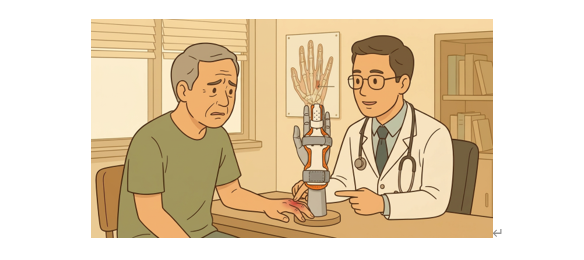
Finger injuries such as mallet finger, boutonnière deformity, and swan neck deformity are among the most common tendon and ligament injuries encountered in daily life.
Appropriate use of a finger splint immobilizes the affected joint at the correct angle, protecting tendons, ligaments, and muscles while promoting healing.
Thermoplastic splints like the StarFix Finger Splint, which can be heat-molded for a custom fit, offer superior comfort and compliance during extended wear.
Key Supporting Muscles & Protection Principles
- Extensor digitorum: Finger extensor tendon. Most commonly injured in mallet finger, causing terminal phalanx droop. → Full DIP extension splinting reduces tendon overload and supports healing.
- Flexor digitorum superficialis & profundus: Finger flexors. Prolonged PIP flexion in boutonnière deformity causes over-tension. → PIP extension splinting allows flexor rest, reducing pain and fatigue.
- Lumbricals & Interossei (intrinsic muscles): Fine motor control and joint stabilization. Over-extension of PIP in swan neck deformity creates imbalance. → Preventing PIP hyperextension helps restore intrinsic balance.
Nerve Protection – Preventing Numbness & Paresthesia
Be cautious of digital nerve compression on the sides, dorsum, and volar surfaces of the finger.
- Radial digital nerve: Dorsal numbness possible if splint is too tight.
- Median & ulnar digital nerves: Fingertip numbness or burning sensation if PIP fixation causes pressure.
If fingertip sensory changes (numbness, tingling) occur, immediately loosen straps and readjust. Well-padded thermoplastic splints distribute pressure effectively and minimize these risks.
Ligament & Tendon Protection – Key Fixation Targets
- Terminal extensor tendon – primary pathology in mallet finger
- Central slip – core lesion in boutonnière deformity
- Lateral bands – main driver of swan neck deformity
Correct Immobilization Angles & Indications
1. Mallet Finger (terminal phalanx droop)
Cause: Crush injury to fingertip, ball impact (baseball, basketball, volleyball), catching sheets/clothing (80%+ daily life incidents).
Fixation: DIP joint 0° full extension to 5–10° slight hyperextension (PIP joint free).
Effect: Prevents secondary swan neck deformity.
2. Boutonnière Deformity (PIP flexion + DIP hyperextension)
Cause: Forced PIP flexion (door handle slip, bat/ball strike), early rheumatoid arthritis overload.
Fixation: PIP joint 0° extension to slight hyperextension (DIP joint free – avoid forced extension).
Effect: Allows lateral bands to migrate dorsally, naturally corrects DIP hyperextension.
3. Swan Neck Deformity (PIP hyperextension + DIP flexion)
Cause: Untreated mallet finger, prolonged smartphone/tablet use, repetitive keyboard/mouse PIP extension, rheumatoid/psoriatic arthritis.
Fixation: PIP joint 20–30° mild flexion (blocks hyperextension), DIP allowed to extend naturally.
Effect: Utilizes tenodesis effect (flexion–extension coupling) to restore DIP extension.
Benefits of Proper Splinting
- 70–80% reduction in joint play → accelerated healing time
- Decreased tendon/muscle overload → rapid reduction in pain and swelling
- Easier return to daily activities (smartphone use, typing, washing, eating)
Always obtain evaluation and approval from an orthopedic or rehabilitation medicine specialist before use.
Improper splinting may cause circulatory compromise or nerve injury.
References
- American Society for Surgery of the Hand (ASSH). Mallet Finger: Symptoms & Treatment. Link
- Orthobullets. Mallet Finger. Link
- Physiopedia. Mallet Finger. Link
- Cleveland Clinic. Mallet Finger. Link
- Physiopedia. Boutonnière Deformity. Link
- Cleveland Clinic. Boutonnière Deformity. Link
- Orthobullets. Swan Neck Deformity. Link
- Physiopedia. Swan Neck Deformity. Link
- Cleveland Clinic. Swan Neck Deformity. Link
- PMC (NCBI). Current concepts: mallet finger (2014). Link
© 2026 Yun Biotech. All rights reserved.

