
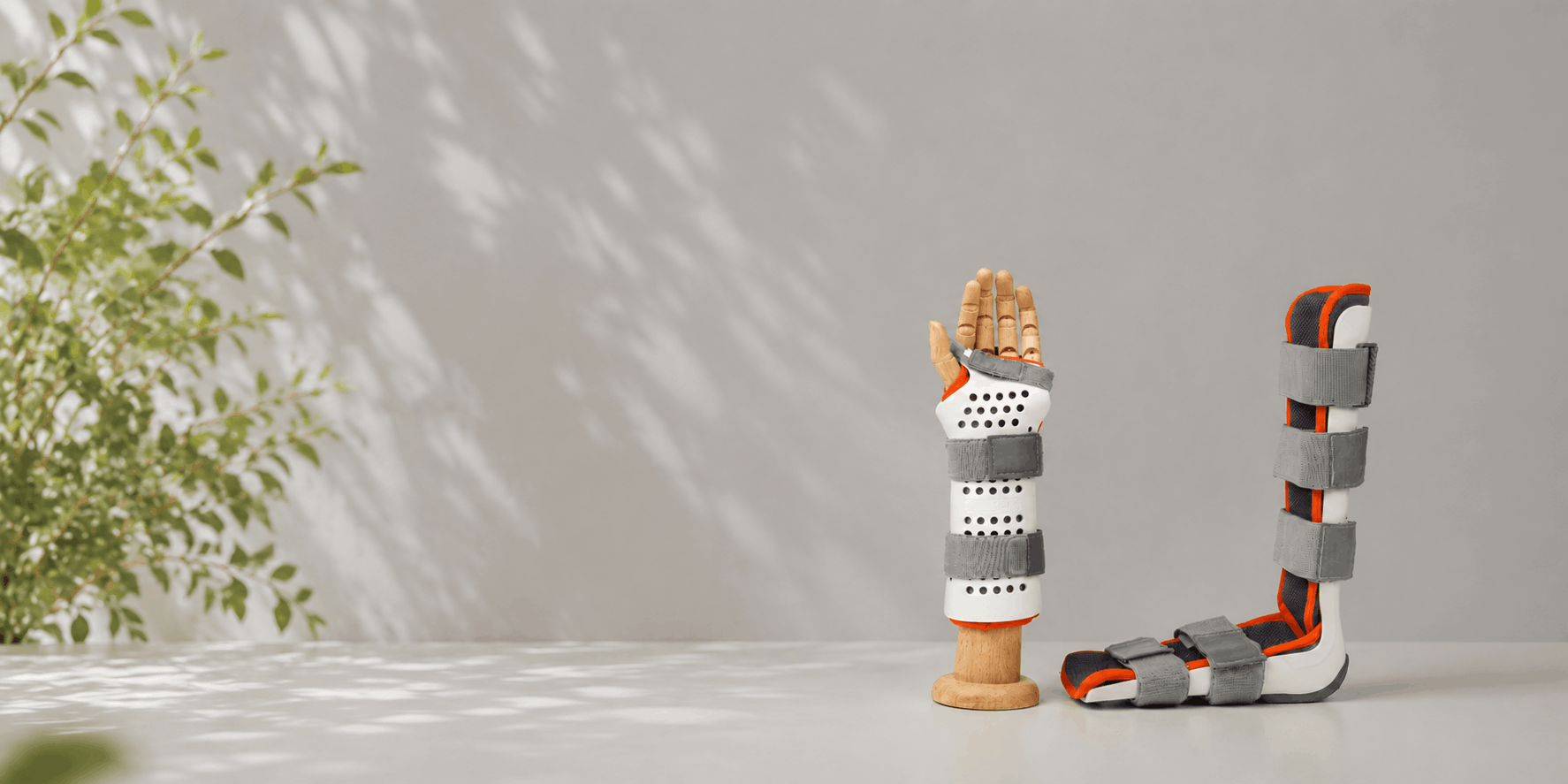


TFCC Tear and Wrist Splint Immobilization: Anatomical Structure and Rehabilitation Guide
Hello, this is Yunbiotech.
If you experience pain on the little-finger side (ulnar side) of the wrist when lifting heavy objects, pushing up from a seated position, or after rotational sports such as golf or tennis, it is worth checking for a possible Triangular Fibrocartilage Complex (TFCC) injury.
In this Yunbiotech information article, we provide medical information on the anatomical structure of the TFCC and the principles of orthopedic splint immobilization, particularly in relation to ulnar gutter splinting.

1. Anatomical Structure and Role of the TFCC (Triangular Fibrocartilage Complex)
The TFCC (Triangular Fibrocartilage Complex) is a complex of ligaments and cartilage located on the ulnar side of the wrist joint. It plays a key role in maintaining wrist stability.
- Stabilization of the Distal Radioulnar Joint (DRUJ): It helps prevent excessive separation between the radius and ulna, reducing joint play during forearm rotation.
- Load distribution: It absorbs and distributes forces transmitted through the wrist, helping to reduce stress on the articular surfaces.
- Common causes of injury: Falls onto an outstretched hand, repetitive twisting motions of the wrist, and cumulative micro-trauma from prolonged computer or smartphone use can all contribute to TFCC injury.
2. Orthopedic Principles of TFCC Immobilization
Certain regions of the TFCC have limited blood supply. Without appropriate early immobilization, wrist pain may become prolonged.
- Restriction of rotation (Pronation/Supination): During the healing process of the TFCC, limiting forearm rotation is important. Therefore, immobilization that stably supports the ulnar head is recommended.
- Application of Ulnar Gutter structure: The splint follows the anatomical curve from the little finger along the ulnar border of the wrist, helping to control mobility of the ulna.
3. Features of Moldable / Breathable Wrist Splints
After the initial acute-phase immobilization prescribed by a physician, or during the rehabilitation phase, custom-moldable splint products offer the following practical advantages:
- Anatomically contoured support: The splint can be heat-molded to match the patient’s ulnar-side anatomy, helping maintain fixation while reducing localized pressure points.
- Re-molding according to swelling changes: As swelling decreases during recovery, the splint can be re-shaped to maintain a proper fit.
- Breathable structure for better skin management: Materials and designs that allow air circulation help reduce skin discomfort that can occur with prolonged wear.
⚠️ [Clinical Warnings]
This guide provides general medical information only. If you notice a strong foul odor under the splint, skin turning blue or white, numbness, worsening swelling, or severe pain, these may be signs of circulatory compromise, nerve compression, or serious skin infection.
In such cases, stop any self-adjustment immediately and seek prompt evaluation by an orthopedic or rehabilitation medicine specialist.
[Disclaimer]
The information and rehabilitation guidance provided in this article are based on general health knowledge and do not replace individual diagnosis or medical advice. Recovery from wrist and ligament injuries varies greatly from person to person. For safe and effective recovery, it is essential to consult a qualified physician and follow their specific recommendations.
Yunbiotech assumes no responsibility for any problems arising from the improper application of this information. Please use it for reference only.
Yunbiotech sincerely wishes every patient a safe and complete recovery.

