
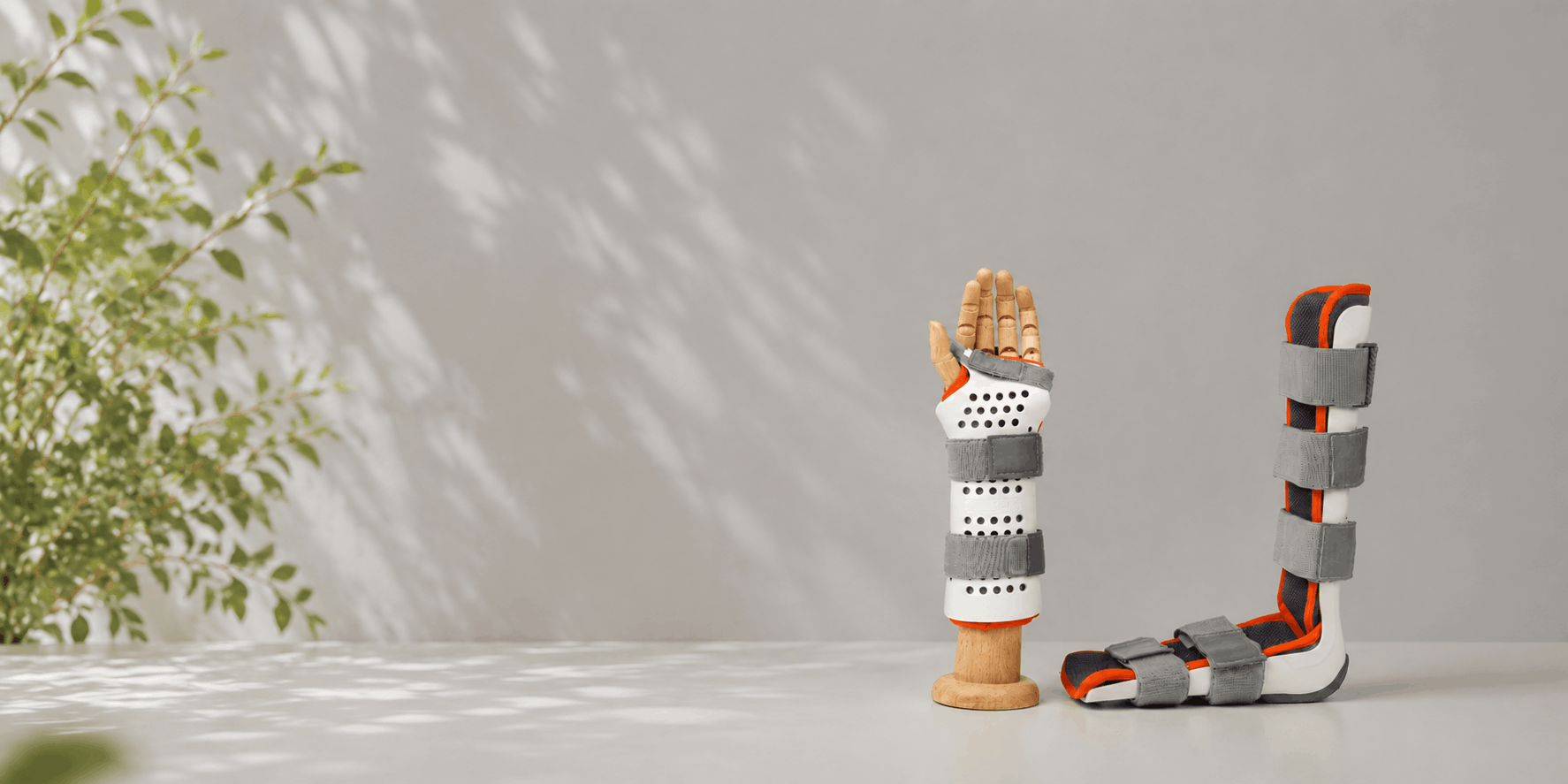


[Summer] How to Manage Sweaty and Itchy Splints & Supports Without Skin Trouble
Hello, this is Yunbiotech.
During the hot and humid summer months, patients wearing splints or plaster casts for wrist or ankle injuries often face significant discomfort. Even slight movement can cause sweat to build up under the support, leading to itching, maceration, and in some cases unpleasant odor.
Today, we share practical, evidence-based tips from orthopedic medicine on how to prevent skin problems and maintain hygiene while wearing a splint in summer.
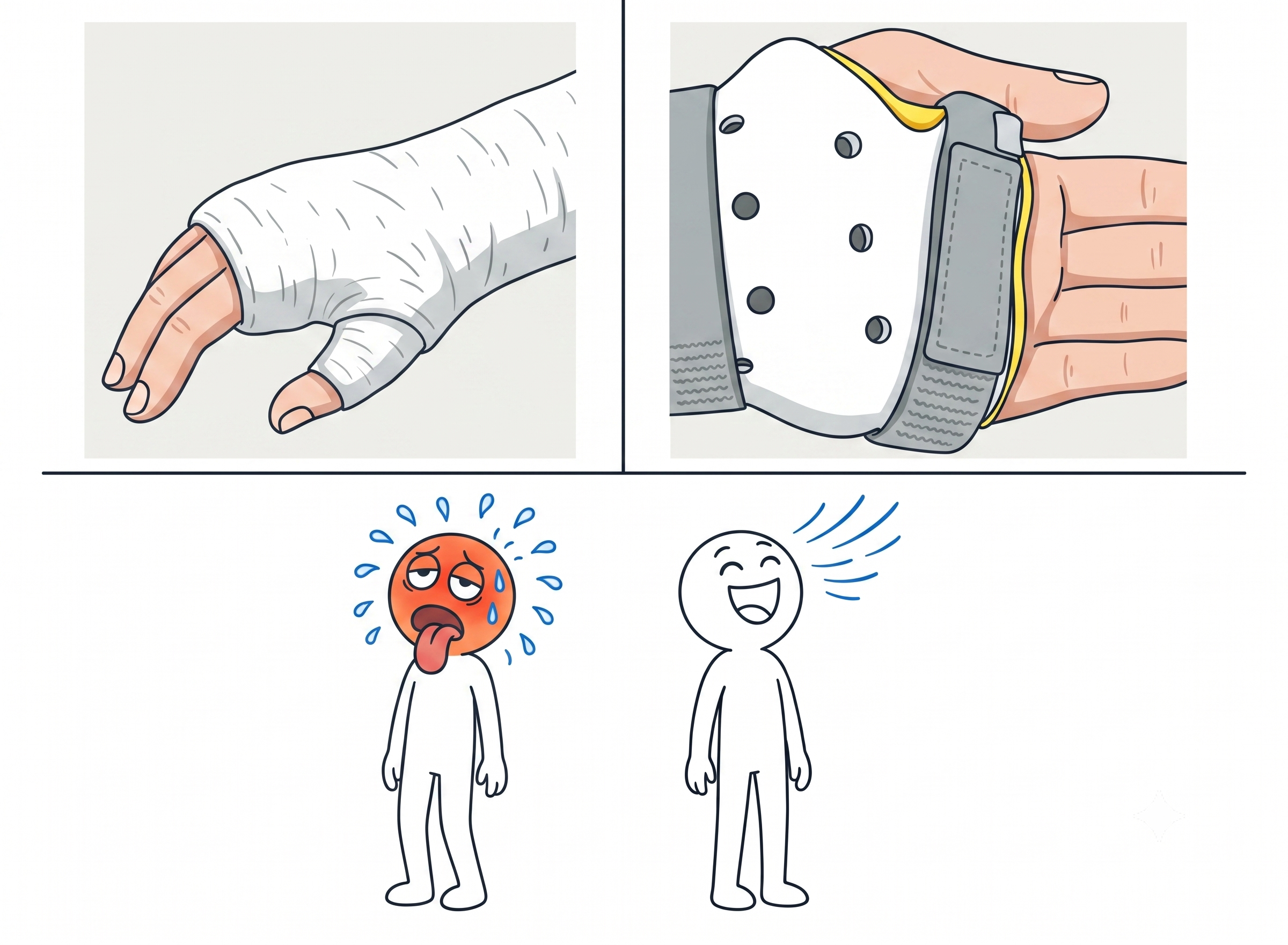
1. Summer Sweat and Moisture Inside the Splint – A Major Cause of Dermatitis and Secondary Infection
According to reports from orthopedic and dermatology societies, one of the most common complications of long-term immobilization with a splint or cast is skin maceration caused by friction and occlusion.
- Occlusive environment and moisture: Inside a sealed splint, sweat cannot evaporate, causing the stratum corneum to absorb excess water and swell (maceration). This rapidly weakens the skin barrier.
- Bacterial and fungal growth: Warm, humid conditions create an ideal environment for skin flora and fungi to proliferate, resulting in heat rash, fungal dermatitis, and odor.
- Friction ulcers: Weakened skin continuously rubbing against padding or lining material can lead to skin breakdown and, in severe cases, pressure ulcers.
2. What You Must NEVER Do When Itching Occurs (Medical Warning)
When the area under the splint becomes intensely itchy, the urge to insert a long object and scratch is strong. However, this is one of the behaviors orthopedic specialists warn against most strongly.
- ❌ Never scratch with a backscratcher, chopsticks, pen, or similar objects
Sharp tips can cause micro-lacerations on skin that has reduced sensation or is already compromised. Bacteria entering through these wounds can lead to cellulitis or serious soft-tissue infection. - ❌ Never pour water or powder directly into the splint
Cool water soaks the padding and dramatically raises internal humidity. Powders (such as baby powder) clump with sweat, further irritating the skin and promoting bacterial growth.
3. Medical Tips for Staying Comfortable in Summer
① Use a Hair Dryer – Cool Air Only!
When itching or stuffiness becomes severe, direct the cool air setting of a hair dryer into the gaps of the splint. Circulating air helps remove moisture effectively.
(※ Never use warm or hot air – it can raise internal temperature, risk burns, or increase sweat production. Always use the cool setting only.)
② Choose a Splint That Allows Hygienic Washing (Unlike Traditional Casts or Roll Splints)
Conventional plaster casts and many roll splints cannot get wet, and their padding cannot be removed, making it difficult to address odor and hygiene issues caused by summer sweat.
To overcome these limitations, custom splints such as StarFix are designed with breathability and washability in mind.
- Air-mesh sponge lining: A three-dimensional air-mesh material promotes excellent airflow and helps absorb sweat.
- Removable and hand-washable structure: Under medical guidance, the air-mesh sponge can be detached, gently hand-washed in lukewarm water, dried, and reattached—allowing clean and hygienic management throughout the wearing period.
③ Keep Surrounding Skin Clean and Control Humidity
Exposed skin around the splint should be washed with lukewarm water and thoroughly dried. If sweating is excessive, consult your physician about checking or refreshing the internal padding.
⚠️ [Important Clinical Warnings]
This guide provides general medical information only. If you notice a strong foul odor, skin turning blue or white, numbness, worsening swelling, or severe pain under the splint, these may be signs of circulatory compromise, nerve compression, or serious skin infection. Stop any self-manipulation immediately and seek prompt evaluation by an orthopedic or rehabilitation specialist.
[Disclaimer]
The information and care methods presented in this article are based on general health knowledge and do not replace individual diagnosis or medical advice. Recovery of an injured area varies greatly from person to person. For safe and effective recovery, always consult a qualified physician before performing any washing, removal, or adjustment of the splint, and follow their specific instructions. Yunbiotech assumes no responsibility for any issues arising from the improper application of this information. Please use it for reference only.
A Word from Yunbiotech
Wearing a splint in summer can feel stuffy and inconvenient, yet it is an essential step for proper bone and ligament healing.
Instead of enduring discomfort or attempting home remedies such as scratching, use proper cool-air drying and consider a washable air-mesh option like StarFix to keep your rehabilitation cleaner and more comfortable throughout the summer.
Yunbiotech sincerely wishes every patient a safe and complete recovery.

