


Improving Upon the Limitations of Traditional Splints:
The Medical Significance of STARFIX's Breathable and Hygienic Design
In the past, orthopedic immobilization treatments primarily relied on plaster casts or sealed synthetic splints. While these methods serve the purpose of immobilizing joints, they have been noted for their limitations, such as causing skin maceration and difficulties in hygiene management due to the enclosed environment.
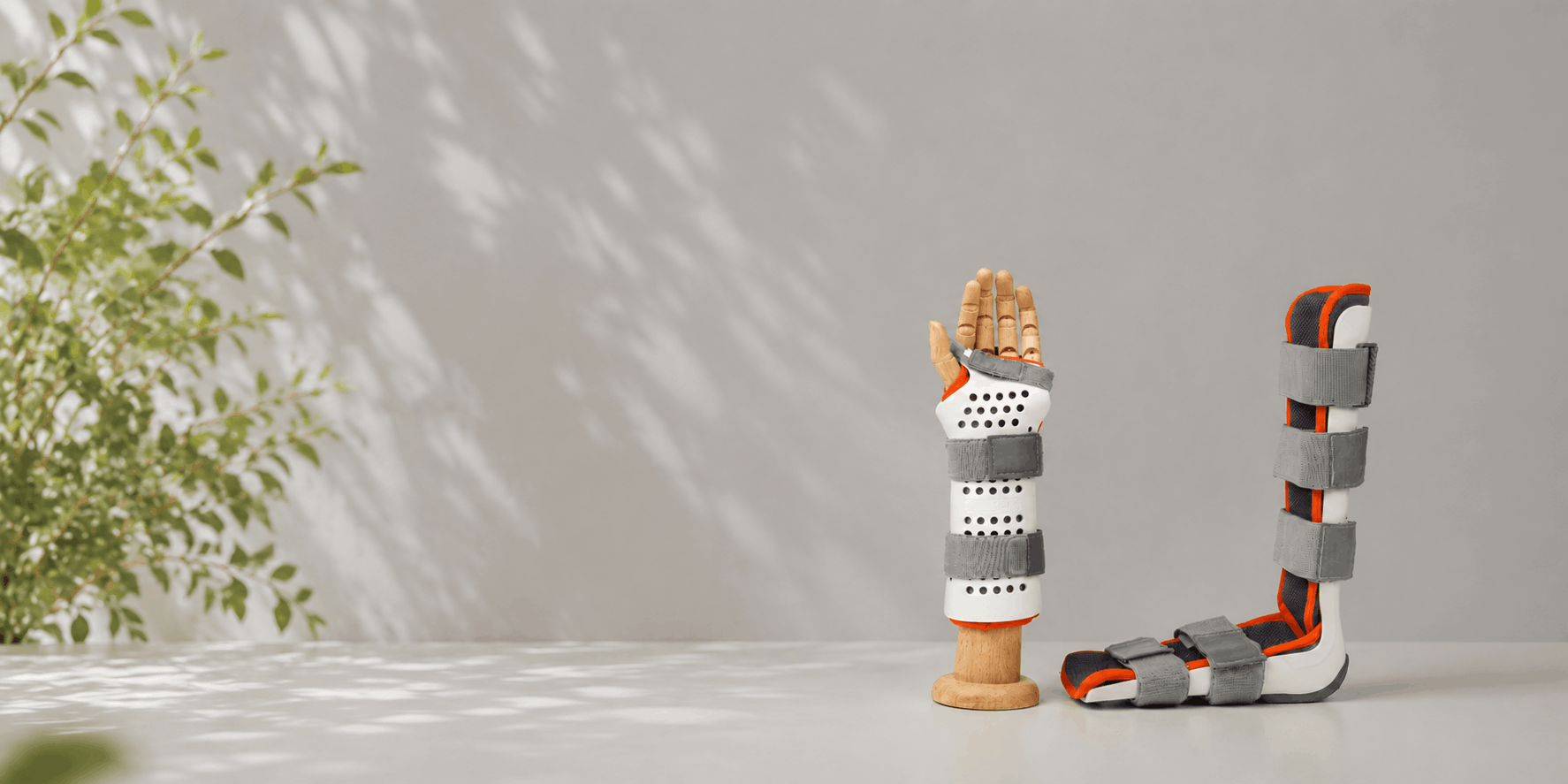
Recently, splint designs like STARFIX have been utilized, which are thoughtfully designed to consider not only the anatomical immobilization of the affected area but also a comfortable skin environment for the patient. We explore the significance of its 'air-mesh design' and the 'characteristics of its plastic materials', both intended to improve the skin environment.
1. Air-Mesh Structure Designed for Temperature Regulation and Moisture Management
Generally, inside a sealed splint, sweat and body heat do not vent smoothly, making it easy for humidity to rise. If the 'maceration' phenomenon—where the stratum corneum (outermost layer of the skin) retains excessive moisture—persists, there is a concern that the skin barrier may weaken.
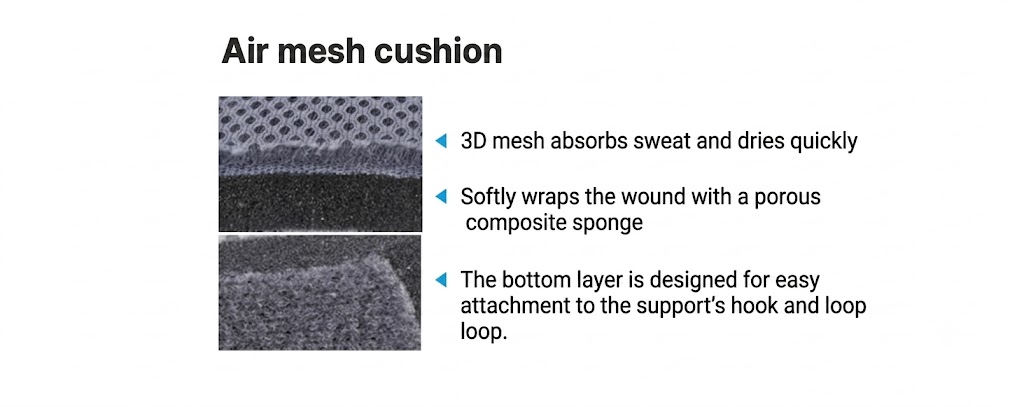
- Consideration for Metabolic Heat Dispersion: Localized heat can be generated during the healing process of damaged tissue. STARFIX is designed with an air-mesh structure that considers airflow so that this heat and sweat do not stagnate.
- Maintaining Comfortable Humidity: By arranging highly breathable fabrics, it is designed to naturally guide internal moisture to vent outward, aiming to minimize the discomfort caused by a weakened skin barrier.
2. Application of Antibacterial Plastic Body for Hygiene Management
When sweat and dead skin cells accumulate on human skin, an environment where microorganisms (such as normal flora) can easily breed is naturally created. This is a primary cause of odors and hygiene issues during long-term wear.
- Adoption of Antibacterial Materials in the Splint Body: STARFIX is designed by applying materials with antibacterial properties directly to the plastic splint body, which is closely adjacent to the skin and susceptible to external contamination.
- Hygiene Support for Long-Term Wear: For patients who must continuously wear a splint during the tissue remodeling phase (weeks to months), it utilizes materials intended to inhibit bacterial growth on the plastic surface, allowing for more hygienic management.
3. The Importance of Design Considering Patient Compliance
Clinically, 'patient compliance' (the degree to which a patient adheres to the prescribed treatment duration) significantly influences the outcome of conservative treatments.
- Inducing a Decrease in Arbitrary Removal Risks: Unventilated immobilization devices can cause patients to feel stifled, which may lead them to arbitrarily remove the splint without their doctor's instruction. This can negatively affect the alignment of the recovering ligaments.
- Supporting Stable Maintenance: STARFIX aims to minimize the discomfort felt by patients through improvements in design and materials. The goal is to help patients stably maintain their splint wear throughout the prescribed period.
References
- Journal of Wound Care: Effects of skin maceration on skin barrier function and susceptibility to infection.
- Orthopaedic Nursing: Managing cast and splint complications: focus on skin integrity and patient compliance.
- American Academy of Orthopaedic Surgeons (AAOS): Guidelines on orthopedic device applications and soft tissue management.

