

YBT News
The latest news and stories from Yunbiotech.
Ankle Injury and Splint Care Instructions
-
 admin
admin
-
 2026-05-08
-
 54
54
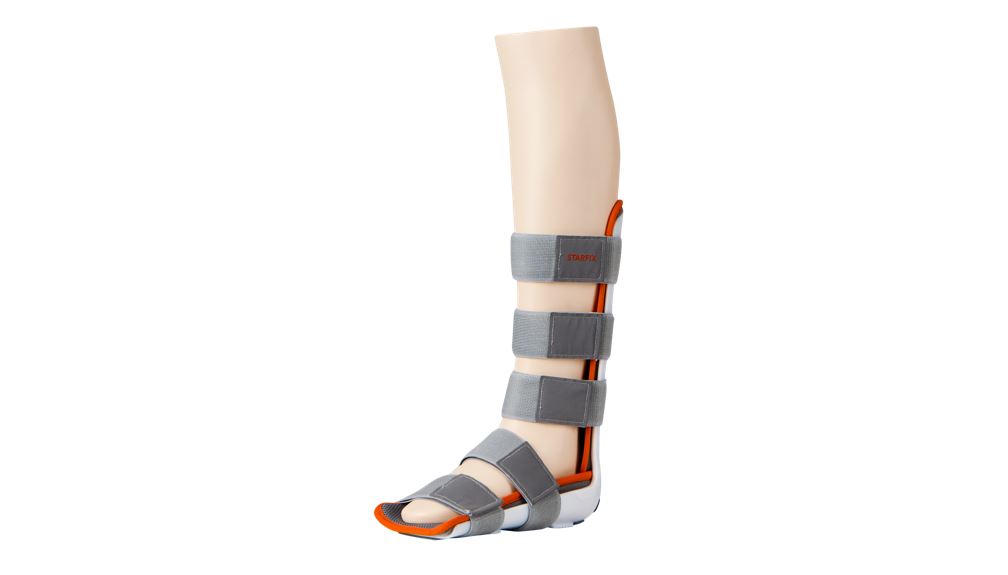
Ankle Sprain
Anatomy
The ankle joint is composed of the tibia, fibula, and talus. Key stabilizing structures include the lateral ligaments (ATFL, CFL, PTFL), deltoid ligament (medial), and syndesmotic complex. Surrounding structures include the Achilles tendon, peroneal muscles, posterior tibial tendon, blood vessels, and nerves.
Common Symptoms
Pain on the outer or inner side of the ankle, swelling, bruising, joint instability, and increased pain when bearing weight.
Role and Purpose of Splint
To immobilize the ankle in a neutral or slight eversion position to prevent further ligament stretching, provide stability, reduce swelling and pain, and promote natural healing while preventing secondary injury.
Ankle Fracture
Anatomy
The ankle joint consists of the distal tibia, distal fibula, and talus. Fractures commonly occur in the lateral malleolus (fibula), medial malleolus (tibia), and posterior malleolus, often accompanied by ligament injuries.
Common Symptoms
Severe pain, swelling, deformity, inability to bear weight, and bruising.
Role and Purpose of Splint/Cast
To maintain anatomical alignment of the fractured bones for proper union, protect surrounding ligaments and soft tissues, control swelling, reduce pain, and provide stability before and after surgery.
Ankle Tendonitis & Tenosynovitis
Anatomy
Key structures include the Achilles tendon, posterior tibial tendon, and peroneal tendons (long and short) along with their tendon sheaths. Muscles such as the tibialis anterior, peroneals, and posterior tibialis control ankle and foot movement.
Common Symptoms
Pain from repetitive use, tenderness, swelling, and crepitus or stiffness during movement.
Role and Purpose of Splint
To minimize movement of inflamed tendons, provide rest, reduce inflammation, and prevent further damage from repetitive stress.
Ankle Arthritis
Anatomy
The ankle joint is primarily the tibiotalar joint, composed of articular cartilage, synovium, and joint capsule, supported by surrounding ligaments and muscle-tendon units.
Common Symptoms
Chronic pain, morning stiffness, swelling, decreased range of motion, and discomfort while walking.
Role and Purpose of Splint
To stabilize the ankle, limit unnecessary joint motion, reduce pain, slow deformity progression, and relieve inflammation.
Achilles Tendon Rupture
Anatomy
The Achilles tendon is the combined tendon of the gastrocnemius and soleus muscles, attaching to the calcaneus (heel bone). It has relatively poor blood supply, making complete rupture common when injured.
Common Symptoms
Sudden sharp pain, a “popping” or “snapping” sound, inability to stand on tiptoes, and walking difficulty.
Role and Purpose of Splint
To hold the ankle in slight plantar flexion to approximate the ruptured tendon ends, reduce tension, and support healing before and after surgery.
Ankle Dislocation
Anatomy
Displacement of the joint surface between the tibia and talus, usually accompanied by ligament tears and fractures.
Common Symptoms
Severe deformity, extreme pain, swelling, and complete loss of movement.
Role and Purpose of Splint
After reduction, to stabilize the ankle, prevent re-dislocation, and support healing of surrounding soft tissues.
Emergency Care - RICE Protocol
- Rest: Avoid putting weight on the injured ankle and limit movement as much as possible to prevent further damage.
- Ice: Apply an ice pack wrapped in a thin cloth to the injured area for 15–20 minutes every 2–3 hours during the first 48–72 hours.
- Compression: Wrap the ankle with an elastic bandage to reduce swelling. Make sure it is snug but not too tight to avoid cutting off blood circulation.
- Elevation: Keep your ankle elevated above heart level as much as possible, especially when sitting or lying down, to help reduce swelling.
Splint Application Precautions
- Do not wrap or apply the splint too tightly, as this may cause circulation problems.
- If you notice toe color changes (pale or bluish), numbness, tingling, or increasing pain, remove the splint immediately and seek medical attention.
- Strictly follow your doctor’s instructions regarding how long to wear the splint and how much weight you can put on the foot.
Important Notice
This content is for general medical information purposes only. All treatments, including the use of splints or casts, must be carried out under the accurate diagnosis and prescription of a qualified medical professional.
Yun Biotech supports your quick return to daily activities.
Splint Application Precautions
- Do not apply the splint too tightly to avoid circulation problems.
- If you notice color changes in the toes, numbness, or severe pain, remove the splint immediately and seek medical attention.
- Strictly follow your doctor’s instructions regarding wearing duration and weight-bearing limits.
Important Notice
This content is for general medical information purposes only. All treatments and splint use must be carried out under the accurate diagnosis and prescription of a qualified medical professional.
Yun Biotech supports your quick return to daily life.

